Senior Program Manager Katie Norman spent four days in Cairns, Kuranda, and the Atherton tablelands in early June to attend the 2026 Isolated Children’s Parents’ Association (ICPA) Queensland Conference and a series of partner visits linked to the Brain Health in Queensland Schools initiative. The itinerary brought together educators, community leaders, government representatives, philanthropic partners, and rural families to explore opportunities to improve outcomes for children and young people across regional Queensland.
A highlight of the visit was the Far North Queensland Brain Healthy Schools Forum. The third such forum, and the first held in Far North Queensland, it was hosted by the Child Health Research Centre and drew 60 attendees from state, independent and Catholic schools. The forum showcased local examples of excellence and created space for new connections to form between people championing student wellbeing and learning, reinforcing the growing momentum behind brain health approaches in Queensland schools.
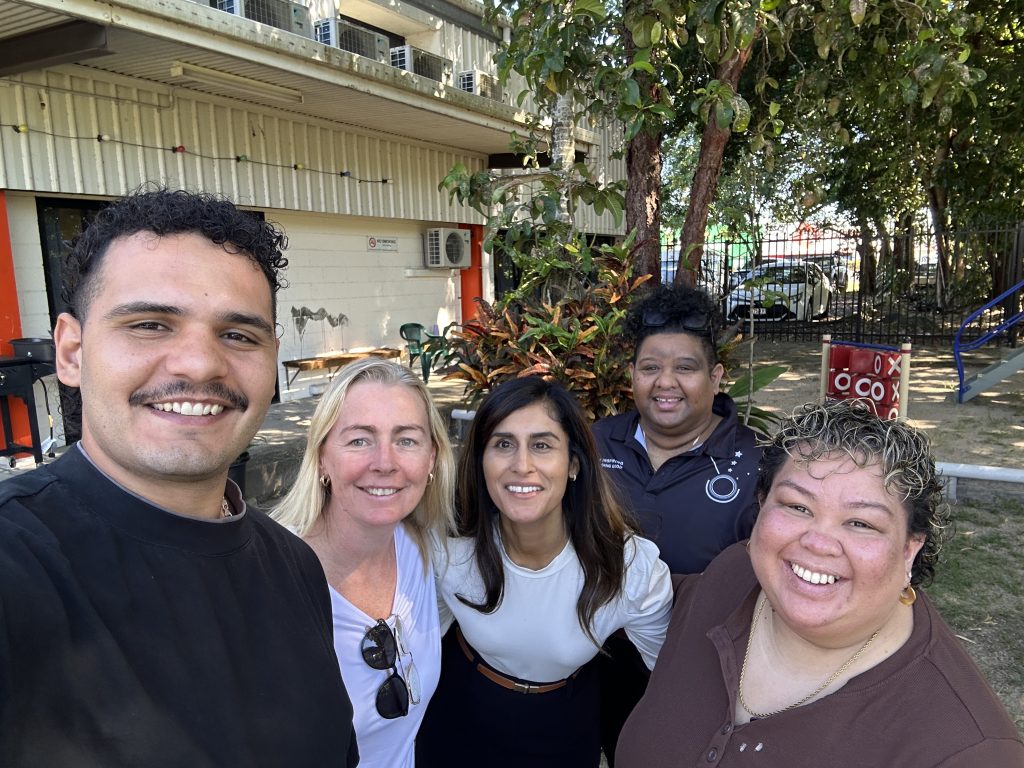
Alongside the forum, Katie visited several TFFF partners. At Deadly Inspiring Youth Doing Good (DIYDG), she met with the leadership team in the organisation’s new home in Manunda to discuss its future direction and ongoing focus on strengthening opportunities for First Nations young people. Jodie Gosel from the John Villiers Trust joined the visit, a sign of the collaborative funding culture growing across the region, and the DIYDG team openly recognised the value philanthropy offers in pursuing their self-determined strategic priorities.
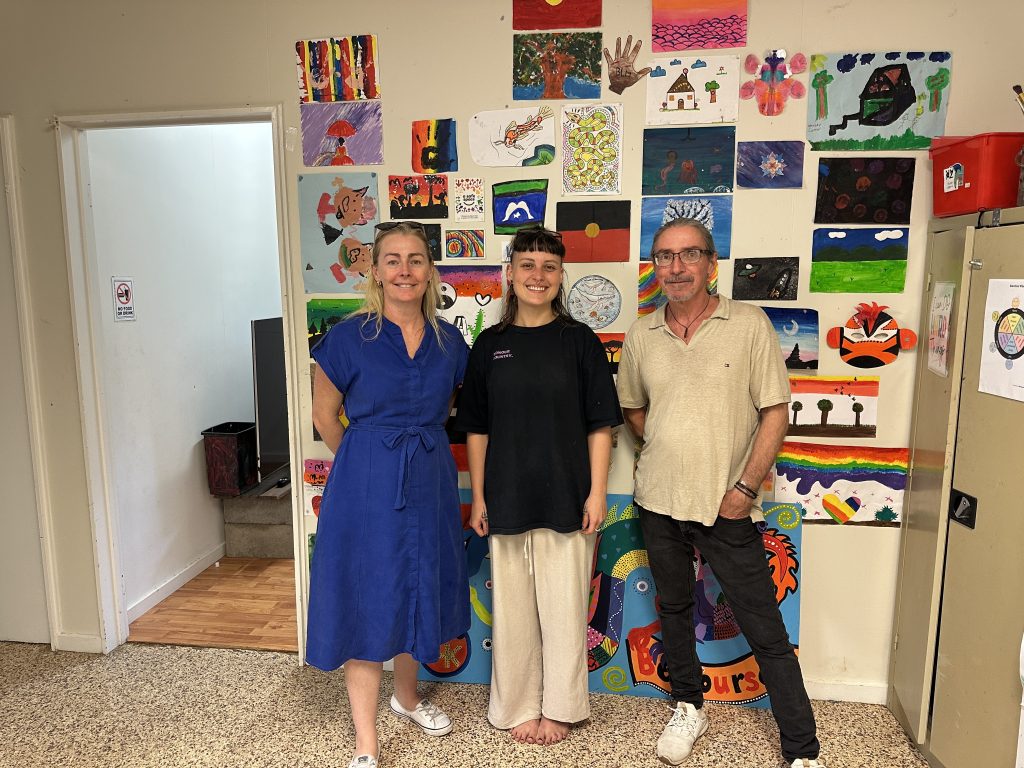
Katie also met with Sheryl Batchelor from Yiliyapinya Indigenous Corporation and the First Nations Justice Office team, who brought welcome news that the first round of Queensland Justice Reinvestment Grants was almost settled, with $5 million to be distributed to First Nations place-based work in Queensland in the near future. Conversations with Youth Cre8 Kuranda, Cape York Partnership, and local schools, joined by travelling partners Dr Georgia Dawson from the University of Melbourne, Alisha Chand from Queensland Kids Partnership, and Susan Hornbeck and Monica Mudderidge from the Shepherd Family Foundation, offered further insight into the innovation and commitment driving community-led solutions across the region.
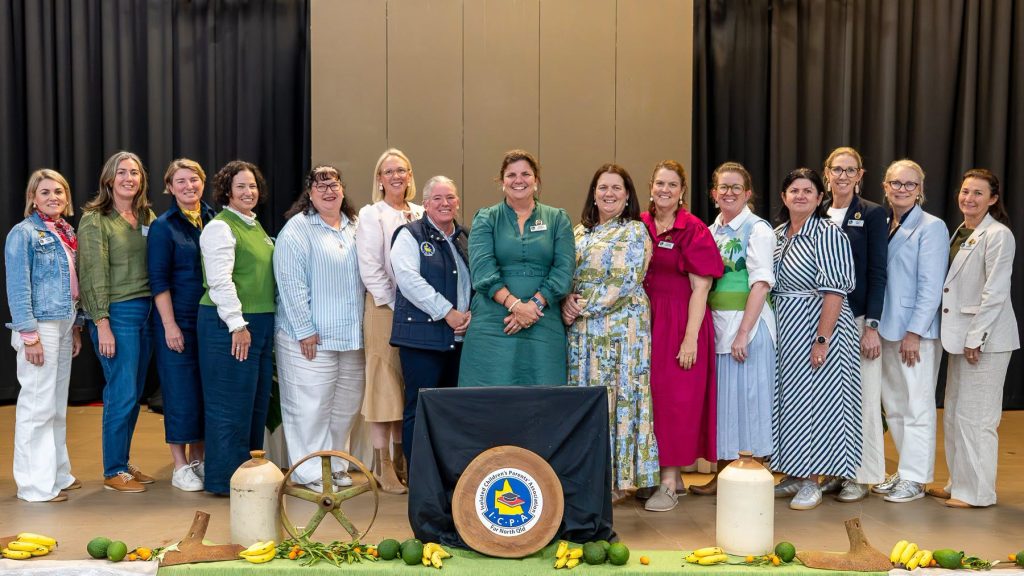
Katie’s visit concluded with the ICPA Queensland Conference in Atherton. Ningana Trust supports ICPA Qld State Council Members to attend each year’s conference and participate in delegations with state government and peak body representatives. As always, the conference was an opportunity to deeply listen to the priorities of rural and remote families, with discussions covering educational access, workforce challenges, the growing pressure on early years infrastructure in the bush, and agricultural pathways for young people. It reinforced the vital role organisations such as ICPA Qld play in advocating for equitable educational opportunities for children growing up outside metropolitan centres.
A month later in July, Program Manager Hannah Barr landed on Gimuy Walubara Yidinji Country for the 2026 Cairns Indigenous Art Fair (CIAF), curated to the theme Reclamation and Regeneration. As CIAF Artistic Director Teho Ropeyarn explains it, “Reclamation is the active retrieval of what was taken, lost, archived or forgotten; whilst Regeneration is the renewal and transformation of that knowledge into vibrant, living cultures.”
Queensland’s vibrant, living, Aboriginal and Torres Strait Islander cultures were expressed in full throughout CIAF’s four-day program across the Tanks Art Centre, new Fashion Performance venue at The Mill, and satellite venues including the refreshed Cairns Art Gallery Precinct and Bulmba-ja.
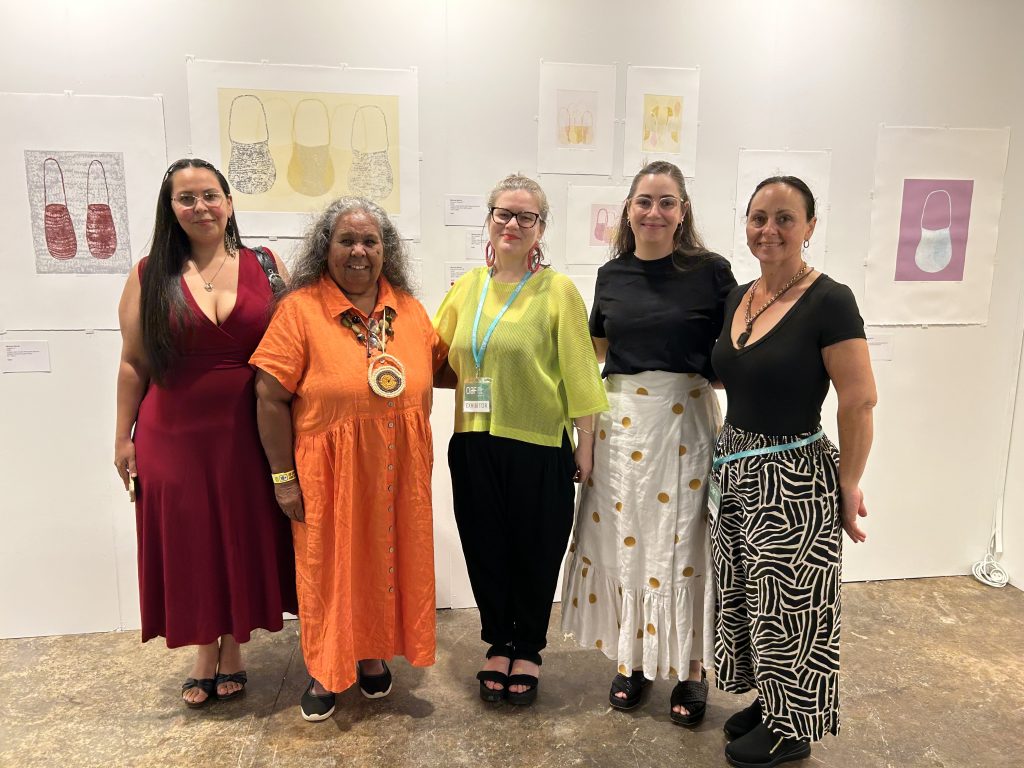
Hannah’s visit began with the Cairns Art Gallery's 'On the Lawn and Live' event in recognition of NAIDOC Week and CIAF. Five significant Queensland First Nations exhibitions were curated across all three Precinct galleries, showcasing diversity and excellence in weaving, printmaking, painting, and multi-modal installation practice.
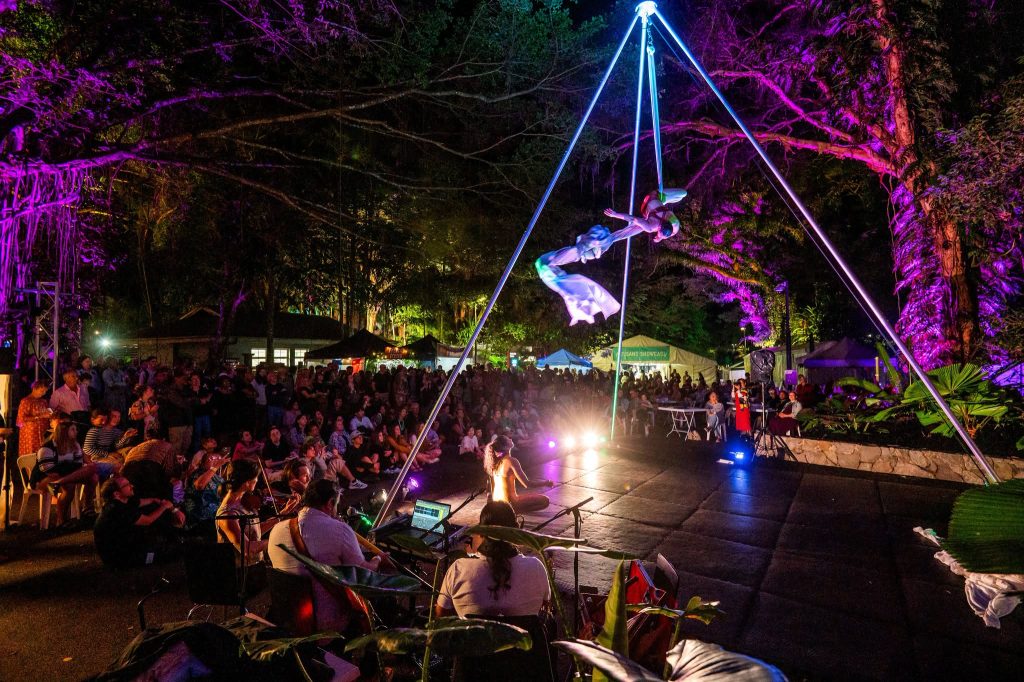
The infectious energy of CIAF’s Opening Night on Thursday 9 July set the tone for a successful Fair, with thousands taking in the Art Fair Showcase (90 artists with 800 works) and Artisans Showcase (130 artists across 36 market stalls), and attending powerful dance, music, and cultural storytelling performances. TFFF partner Circa Cairns premiered Nurture, a new female acrobatic duet exploring women’s strength, leadership, and storytelling directed and co-choreographed by Kukuyalanji and Waanyi woman Marilyn Miller, with original music by Yalanji man Luke Briscoe.
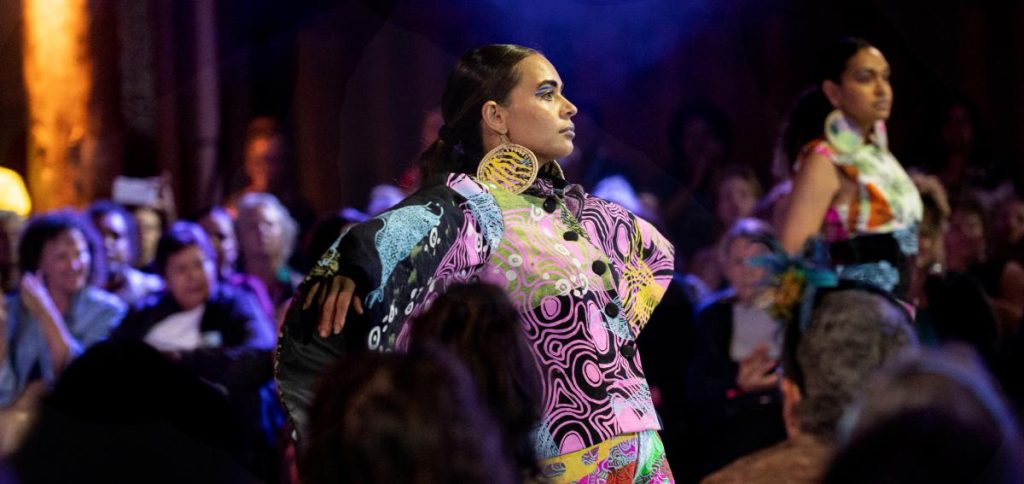
TFFF-supported Fashion Performances on Thursday and Friday platformed 24 collections from emerging and established Aboriginal and Torres Strait Islanders designers and Art Centres and facilitated Indigenous cultural exchange with international guest designers from Taiwan and New York for the first time.
The visit allowed Hannah to connect with many more of TFFF’s past and present peer and partner organisations across the arts sector, including Aboriginal Art Co, Umbrella Studio, artisan, Dancenorth, QAGOMA, JUTE Theatre Company, QIC, and Arts Queensland and Regional Arts Advisors through the Regional Arts Services Network. It was particularly heartening to see the leadership of the Darwin Aboriginal Art Fair Foundation cheering on the CIAF team and Queensland’s Indigenous Art Centres and independent artists.
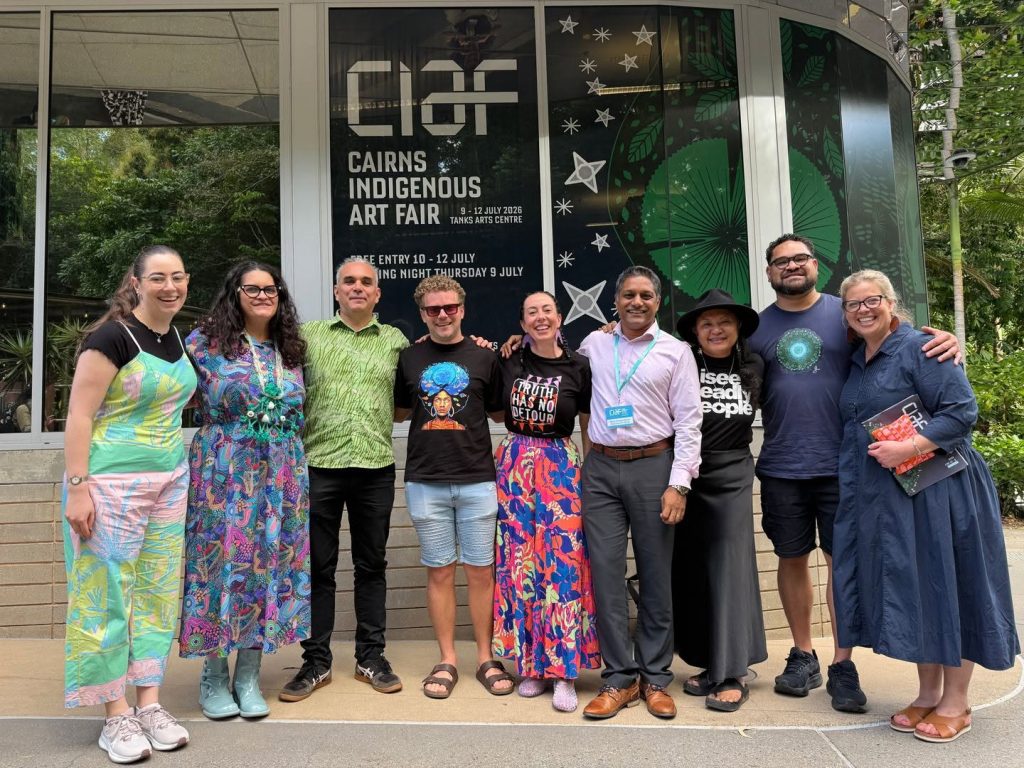
Hannah was fortunate to experience various additional events as a delegate in CIAF’s expanded ‘On Country’ Program hosted by artist Tony Albert and supported by Perina Drummond. Through artist talks and shared meals, artists, curators, collectors, and CIAF supporters built new connections with artists and each other, and learned more about Gimuy Walubara Yidinji Country. The TFFF thanks CIAF’s leadership team, Tony Albert, and Perina Drummond for their hospitality, and encourages everyone to bookmark next year’s CIAF dates: 8-11 July 2027.
Both trips underscored something the TFFF team knows well: there is no substitute for being there in person, and there is real strength in funders travelling and working alongside one another. Whether meeting with educators, youth leaders, artists, or community organisations, conversations highlighted the power of local leadership and long-term investment in people and place, and reinforced the value of taking time to listen, learn, and strengthen relationships.
Cover photo: Projection Art by Pormpuraaw Art and Culture Centre at CIAF 2026 Opening Night. Photo: Blueclick Photography.
Deadly Inspiring Youth Doing Good, Youth Link (Youth Cre8), Circa Cairns, and the Cairns Indigenous Art Fair are supported by TFFF through the Resilient funding stream. The Brain Health in Queensland Schools initiative is supported though the Futureproof funding stream.
The Isolated Children’s Parents’ Association Queensland is supported by Ningana Trust.
When it comes to child development, place matters! What surrounds us, shapes us1 – that is, a wide range of conditions, such as the social, built, and natural environments of a place affect lifelong physical and mental health. Systemic factors, such as how health, education, transport, housing, and other systems are delivered in communities also affect development. Systemic influences such as public policies and structural inequities have led to intergenerational poverty and disadvantage, and most often that is concentrated in some places more than others.
Beginning in 2023, place leaders, academics, government representatives, intermediaries, and philanthropic organisations analysed the work of the Queensland Kids Partnership’s (QKP) Thriving Places, Thriving Kids Collaborative, and proposed the Thriving Places Queensland Network. A design team, which included the TFFF, then spent a further year co-developing the model to translate the proposal into an actionable plan that strengthens the network of place-based initiatives in Queensland.
The Thriving Places Qld Network is the first of its kind in Australia. The Network will support the 46 places with place-based initiatives in Qld, ranging from emerging initiatives such as Western Downs Futures to national exemplars like Cape York Partnership.
The vision of the Network is to enable and sustain place-based systems change through strong networks, shared learning, community-led action, and coordinated investment. This will result in a thriving place-based ecosystem capable of tackling complex challenges collectively and innovatively.
For us, the real strength of the Network lies in the quality of relationships and the shared commitment to improving outcomes for children and families. It strengthens local leadership while contributing to a more coherent and collaborative reform effort across Queensland
- Gladstone Region Engaging in Action Together
All place-based partners, including funders, have a role to play in shifting conditions in places of concentrated disadvantage. This pioneering effort will be a national demonstration of the importance of collective efforts in improving outcomes for children and families in the most disadvantaged places.
In its first year, the Network has created the infrastructure for capability building such as just in time peer to peer support, learning exchanges, and Friday chats. The Network has also involved a Philanthropic Funders Community of Practice (CoP), which involved a full-day learning experience in February, and held its first Breakthrough Innovation Group (BIG), hosted by Logan Together in March.
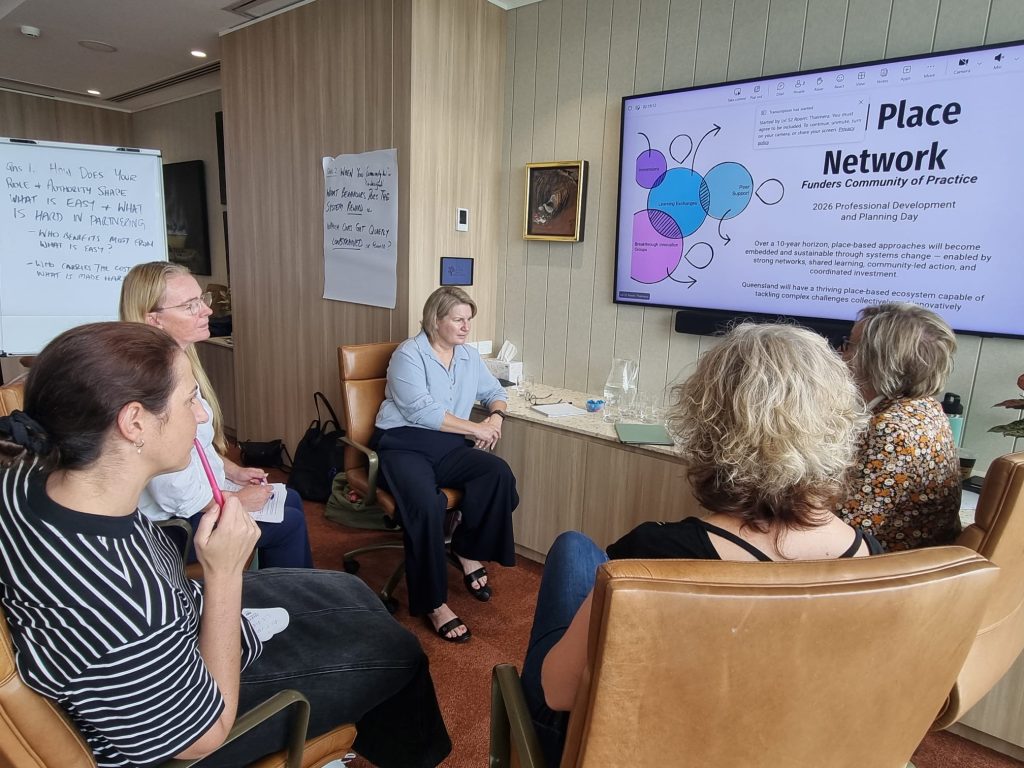
The Funders CoP aims to build a shared understanding of what it takes to partner well as a funder within the Thriving Places Qld Network, by pursuing new & better ways to work together and creating space for collective learning & doing.
Facilitated by Eula Rohan (Principal Partnership Manager – Place, QKP), Rowena Cann (Convenor, Places and Hubs, QKP), Margot Beach (General Manager, Dusseldorp Forum), and Katie Norman (Senior Program Manager, TFFF), the CoP involved representatives from philanthropic organisations and leads from several of the place-based initiatives within the Network. Participants explored what effective partnership looks and feels like in practice, examined roles, assumptions, power and responsibility in collaboration, and reflected on what each person and organisation can genuinely contribute.
As a community of practice, the session was designed to invite action – encouraging new partnering approaches that strengthen relationships and improve outcomes for families and children across Queensland.
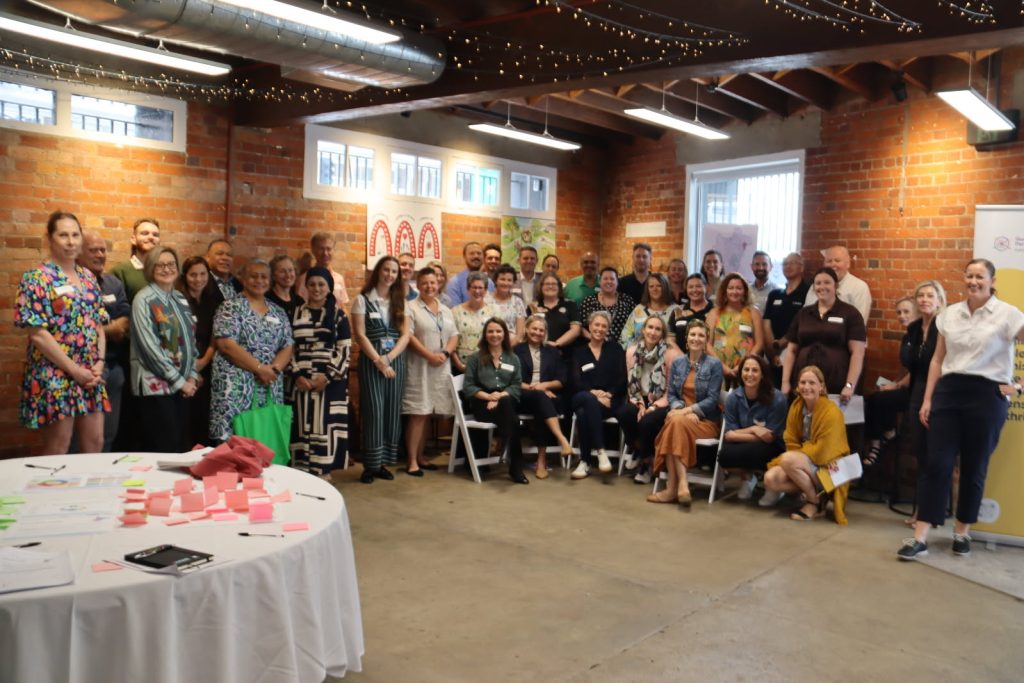
The BIG focused on collaborative commissioning, with an aim to bring together communities, government, philanthropy, intermediaries, academics and business. Over two days, 40 participants including regional community representatives and federal and state government partners came together to test ideas and develop a three-month action plan.
Cover photo: The Thriving Places Qld Network Funders Community of Practice.
[1] How Environment Shapes Early Childhood. Center on the Developing Child, Harvard University.
The Thriving Places Qld Network is supported by the TFFF through the Futureproof funding stream.
Funding partners: John Villiers Trust, Dusseldorp Forum, CAGES Foundation, Equity Trustees, The Bryan Foundation, Hand Heart Pocket.
The Karrkad Kanjdji Trust (KKT) is a philanthropic trust that was established by Traditional Owners of the Warddeken and Djelk Indigenous Protected Areas in 2010, to support their vision for healthy Country. As custodians of much of West and Central Arnhem Land – one of the largest Indigenous estates in Australia – they recognised the potential strength and increased freedom and flexibility of alternative funding sources.
Today, KKT is a shared resource to eight First Nations community-controlled organisations in Arnhem Land, supporting the preservation and revitalisation of culture, and the conservation of over 50,000 square kilometres of land and sea Country.
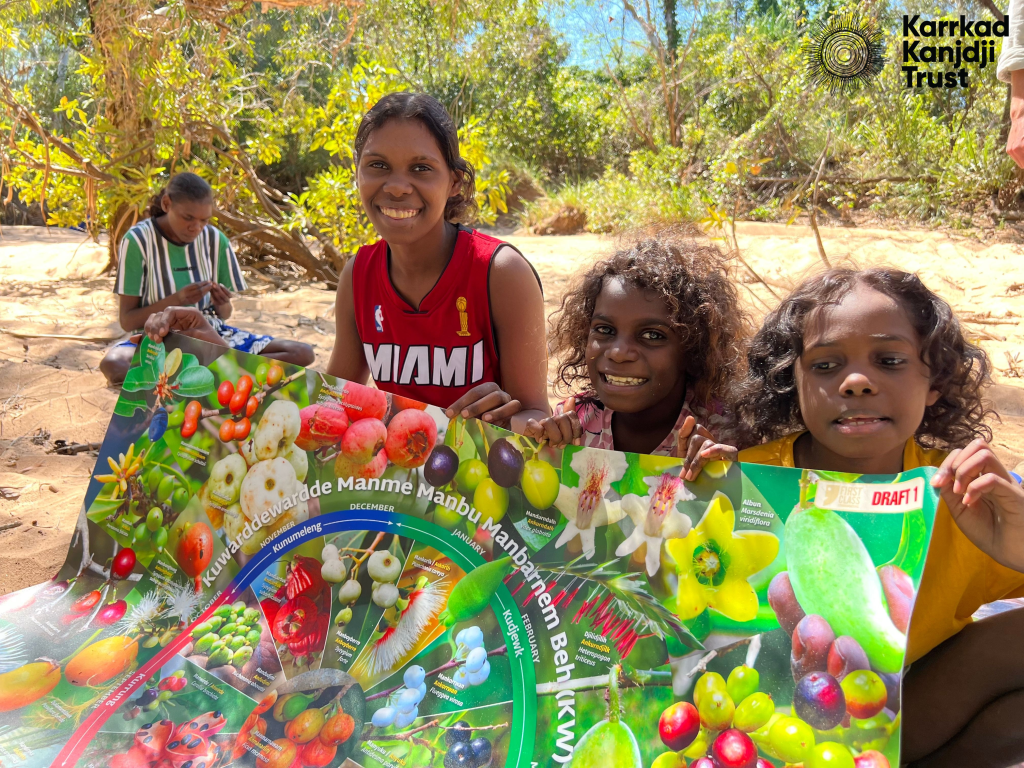
One of KKT’s six funding pillars is ‘Educating future custodians’, recognising that on-Country, bi-cultural education enables First Nations children and young people to walk confidently in both worlds. This support began with the Nawarddeken Academy: the Warddeken Indigenous Protected Area (IPA)’s first independent, bi-cultural school. Expanding on this success, KKT supported the establishment of the Nawarddeken Academy’s Early Learning Program, which centres families as first teachers.
This is a bush library, this is where you learn your knowledge.
- Ross Guymala, Bininj teacher at Nawarddeken Academy
In 2019, Traditional Owners and senior leaders of Bulman-Weemol communities came together to design the Mimal Learning on Country Program: a collaborative, on-Country initiative between Mimal Land Management and Bulman School that safeguards the passage of intergenerational knowledge.
This journey of regional, place-based approaches continued when KKT commenced support for the Homeland School Company, an on-Country, bi-cultural organisation that will support children to learn on their homelands within the Djelk IPA. In particular, the Homeland School Company intends to register independent, bi-cultural schools at three homelands communities, ensuring that families have access to full-time, on-Country education.
By setting up independent schools on the homelands, we’re thinking about how our old people’s knowledge can be respected, and how we can teach the young ones on Country.
- Dale Pascoe, Chair of Homeland School Company
By connecting their partner organisations with additional, often more flexible funding sources, KKT is bolstering this incredible wave of Aboriginal community-controlled education initiatives. This two-way, community-led approach to learning is transforming the state of remote education across West and Central Arnhem Land.
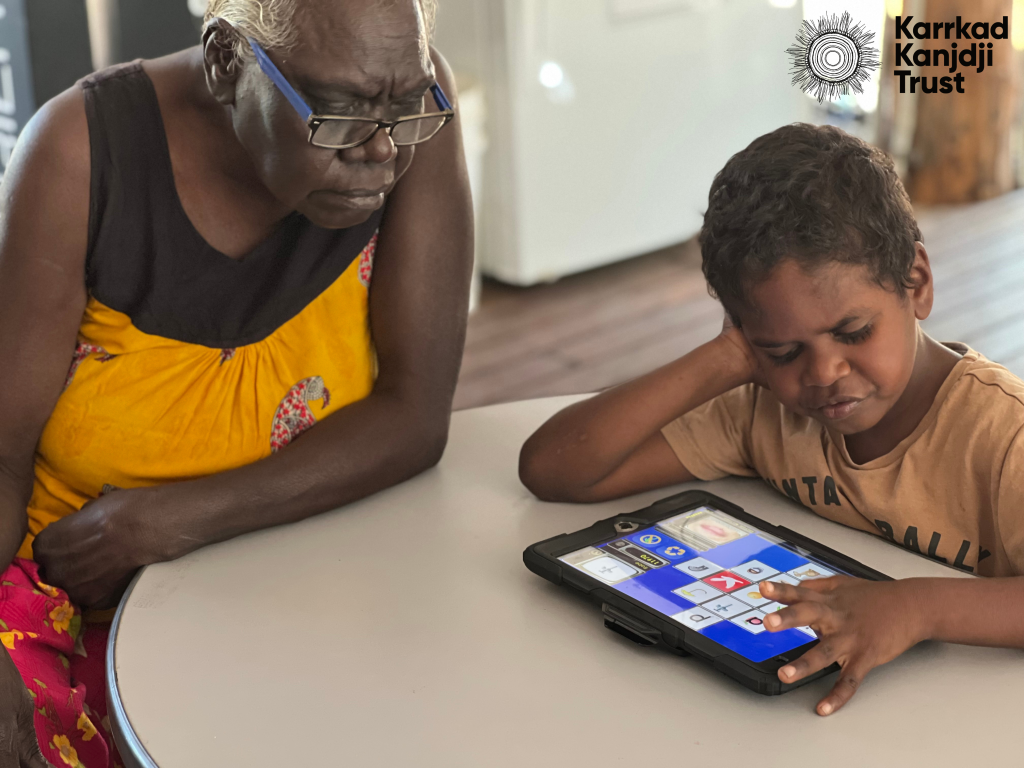
The TFFF first partnered with KKT in May 2023, supporting the expansion of the Nawarddeken Academy at two sites, Manmoyi and Mamadawerre. Now, this partnership will similarly support the Homeland School Company to prioritise the intergenerational transfer of Indigenous knowledge and sustain natural and cultural ecosystems at three schoolhouses within the Djelk IPA.
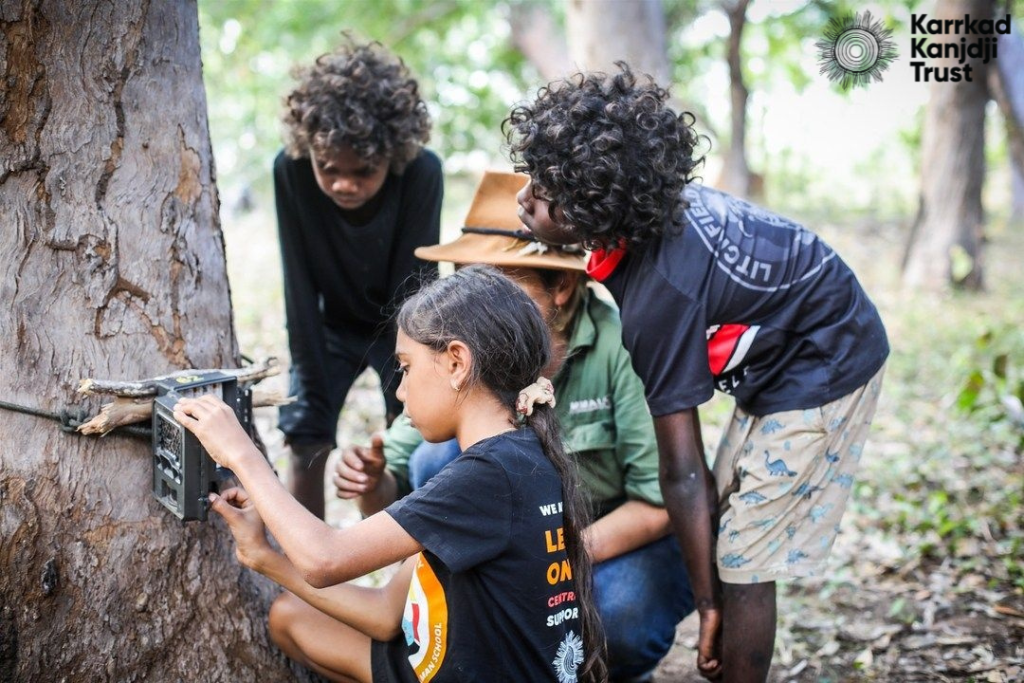
Cover photo: Manmoyi outstation in the Warddeken Indigenous Protected Area. Image Credit: Adelaide Ford. All photos courtesy of Karrkad Kanjdji Trust.
The Karrkad Kanjdji Trust and the Homeland School Company are supported through the Futureproof funding stream.
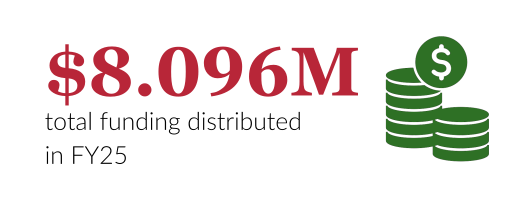
FY25 saw the TFFF distribute $8.096 million to 43 for-purpose organisations through values-based philanthropy. This included the commencement of three nine-year funding agreements in a new strategic partnership program – the terms of which may constitute a first for Australia’s arts sector – reflecting the Foundation’s belief that long-term, trust-based partnerships enable organisations to focus on their mission with clarity and stability.
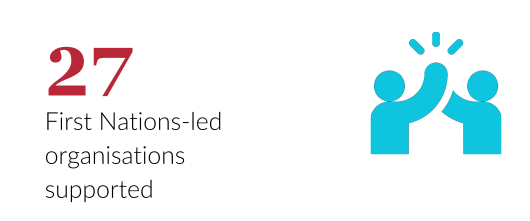
The TFFF has long recognised the significance of the work carried out by Indigenous-led organisations in Australia, and the importance of listening deeply to Traditional Owners, amplifying their voices, and supporting their solutions for meaningful change on their own terms. In FY25, the TFFF supported 27 First Nations-led organisations, distributing a total of $3.36M to First Nations leaders, organisations, and projects.
We would like to extend sincere thanks to TFFF Trustees Tim Fairfax AC, Gina Fairfax AC and Jim Peterson, and Advisors Sarah O’Brien, Lucy Coulson, Fiona Poschelk, and Prue Pateras for their commitment to the work of the Foundation. Above all, we thank the for-purpose sector leaders, staff, and volunteers who give their time, energy, and passion to build stronger, happier, healthier, and more inclusive communities. Your work inspires ours.



View the full 2024-2025 Annual Report here.
Cover photo: Lighting the Dark Brisbane Festival Premiere Season - Chris Dyke and the Dancenorth Ensemble. Image: David Kelly 2024, courtesy of Dancenorth.
The BHiQS initiative has been designed to equip children and young people, their families, and teachers with the skills they need to live their best lives. It will employ knowledge of childhood brain development, and an understanding of the developmental significance of the school years, to improve the life trajectory of Queensland’s children and young people.
BHiQS will initially be delivered in rural Queensland schools, to both optimise child development and prevent the onset of mental health issues.
The delivery of this initiative will see:
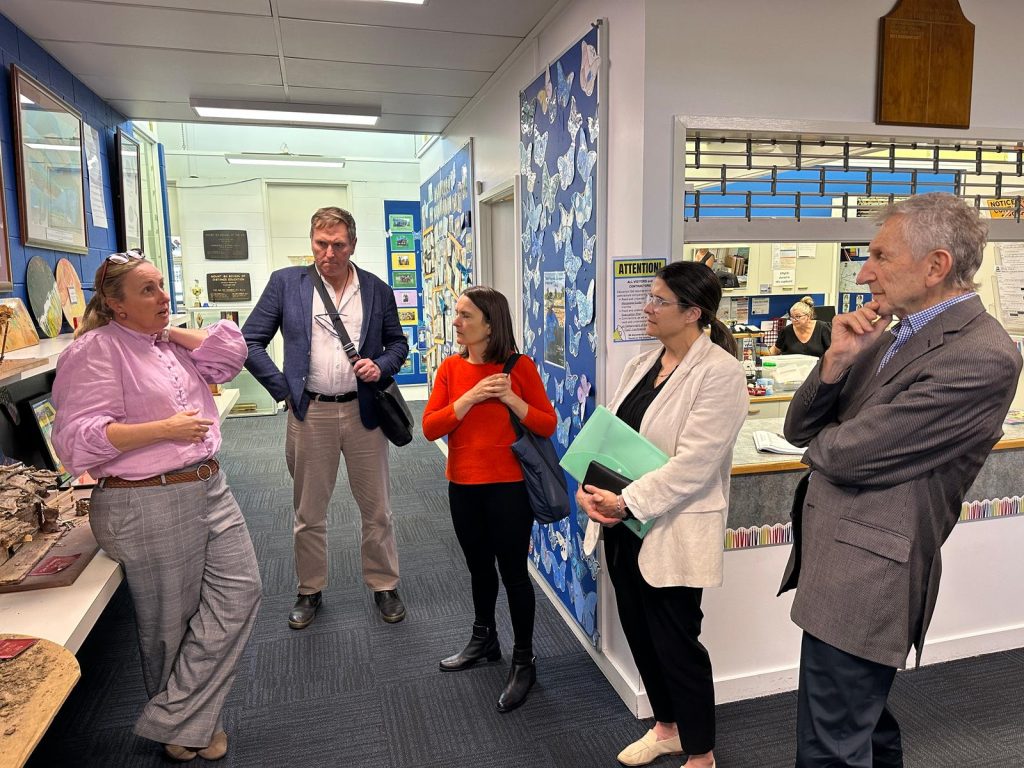
About 138,000 Queensland children aged 0-14 experience mental ill-health, a number that increases throughout adolescence. Suicide remains the leading cause of death for young people, with incidences higher in places characterised by limited specialised mental health services, such as rural and remote areas. The case for prevention is clear.
Smiling Mind’s 2024 State of Mind Report, which explores the mental wellbeing of Australian children aged 4-12 and their parents and caregivers, concludes that the childhood years are the optimal time to equip children with the knowledge, skills and confidence to identify and manage challenges as they arise, laying the foundations for resilience and a mentally healthy life.
The National Children’s Mental Health Strategy identifies education settings as ideal environments to build resilience, prevent the onset of mental illness and optimise development in pursuit of lifelong wellbeing as well as academic success. Schools are relatively universal, non-stigmatising environments where children can be engaged over time, which is particularly true in rural and remote communities. Rural schools are often also community hubs, with strong partnerships with families and community organisations that have great potential to support student wellbeing.
Brain Health in Queensland Schools intends to build a prevention-focused whole of system response that increases the capacity and capability of schools to support student and staff wellbeing, whilst also establishing clear pathways for referral for students requiring assessment and intervention.
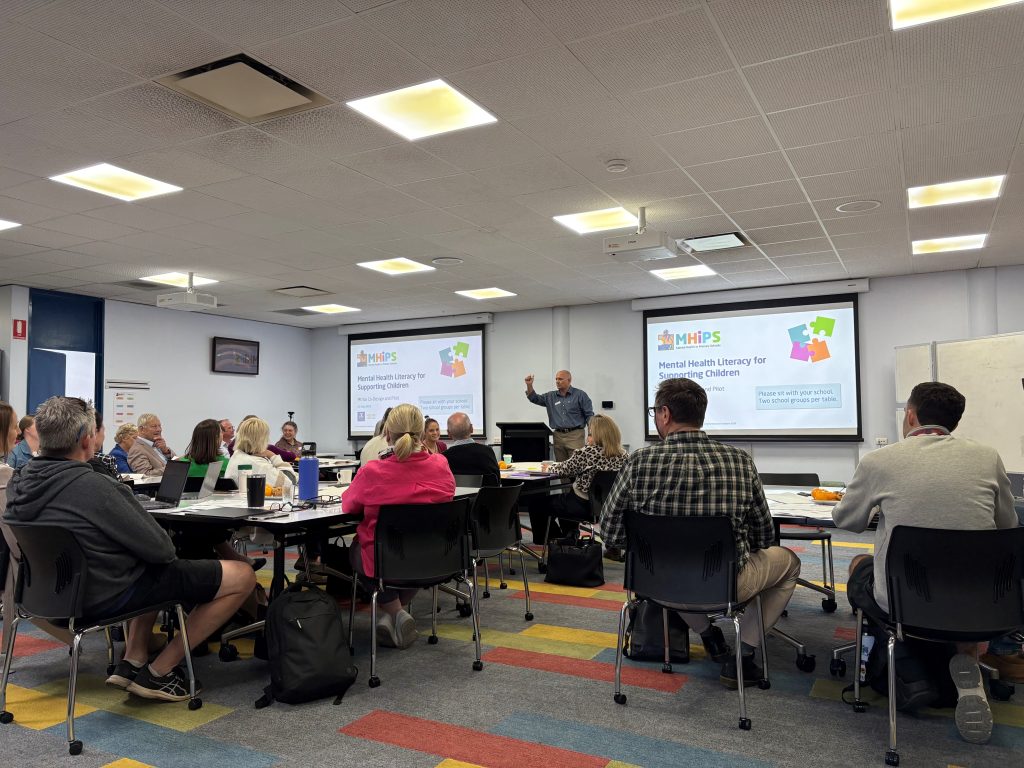
The initiative is multi-faceted and will be piloted for the first time in Queensland through a collaboration between Murdoch Children’s Research Institute and partner, the University of Melbourne, and the Queensland Brain Institute at the University of Queensland; implemented as a significant part of the Thriving Queensland Kids Partnership Brain Builders initiative.
Murdoch Children’s Research Institute and the University of Melbourne designed and deliver the successful Mental Health in Primary Schools (MHiPS) initiative, which is currently being rolled out across all Victorian primary schools with the support of the Victorian Department of Education.
Support from TFFF has enabled the Mental Health in Primary Schools team to collaborate with the Queensland Department of Education’s Partnership and Educational Precincts Initiative to co-design and pilot a version of this initiative tailored to the needs of Queensland schools, families, and young people.
Following the assessment of possible precincts to participate in the trial, and in ongoing discussion with the Queensland Department of Education, Mount Isa was identified as a suitable location to undertake the pilot program, and community consultation began.
Several trips, and many conversations, later, all schools in the Mount Isa Precinct have agreed to participate in the first ever pilot of this groundbreaking initiative, and were engaged in the first co-design workshop, held last week in Mount Isa.
Alongside this work, the Queensland Brain Institute is co-designing a workforce development package with Independent Schools Queensland and regional Catholic schools, which includes guidance for schools when selecting existing evidence-based neuro-informed programs.
The Brain Health in Queensland Schools initiative was officially launched in October when all parties involved came together for a symposium to scope out and plan initial steps. A rural launch is planned for June in Townsville, which will involve a showcase of best practice and dedicated time for co-design.
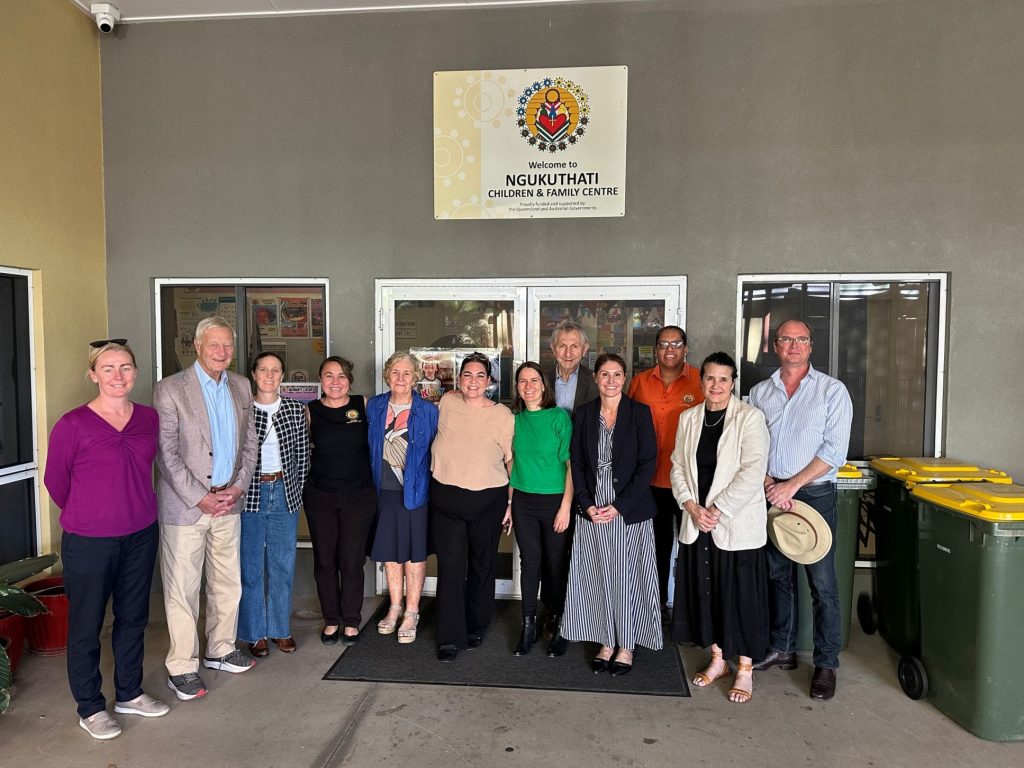
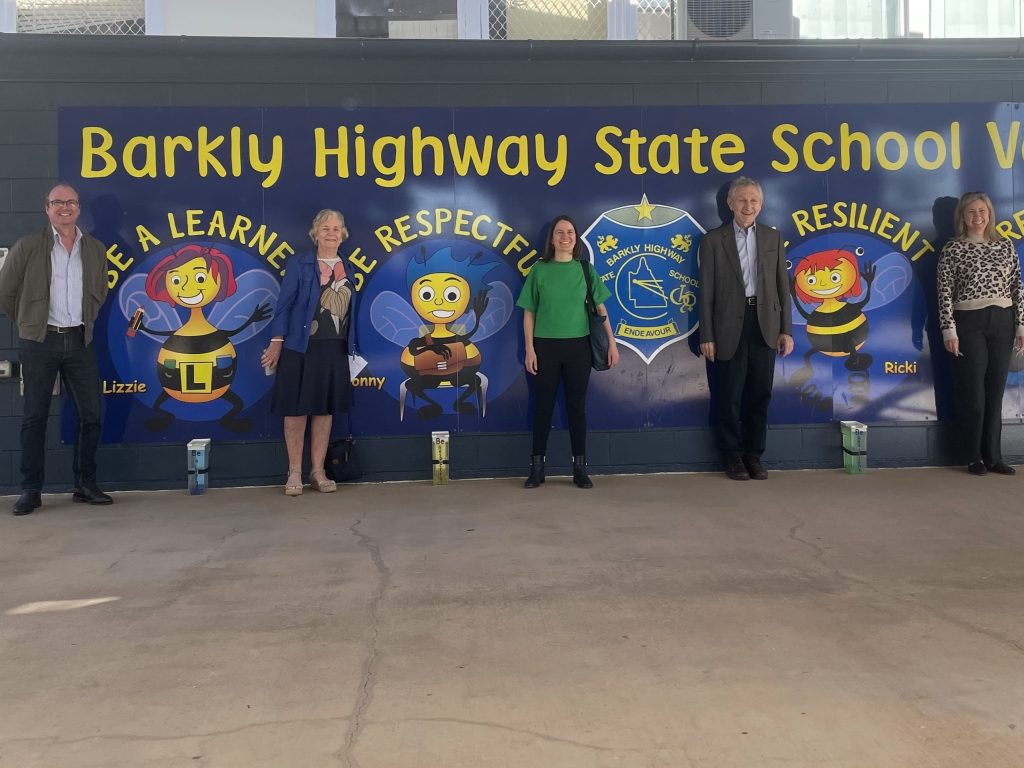
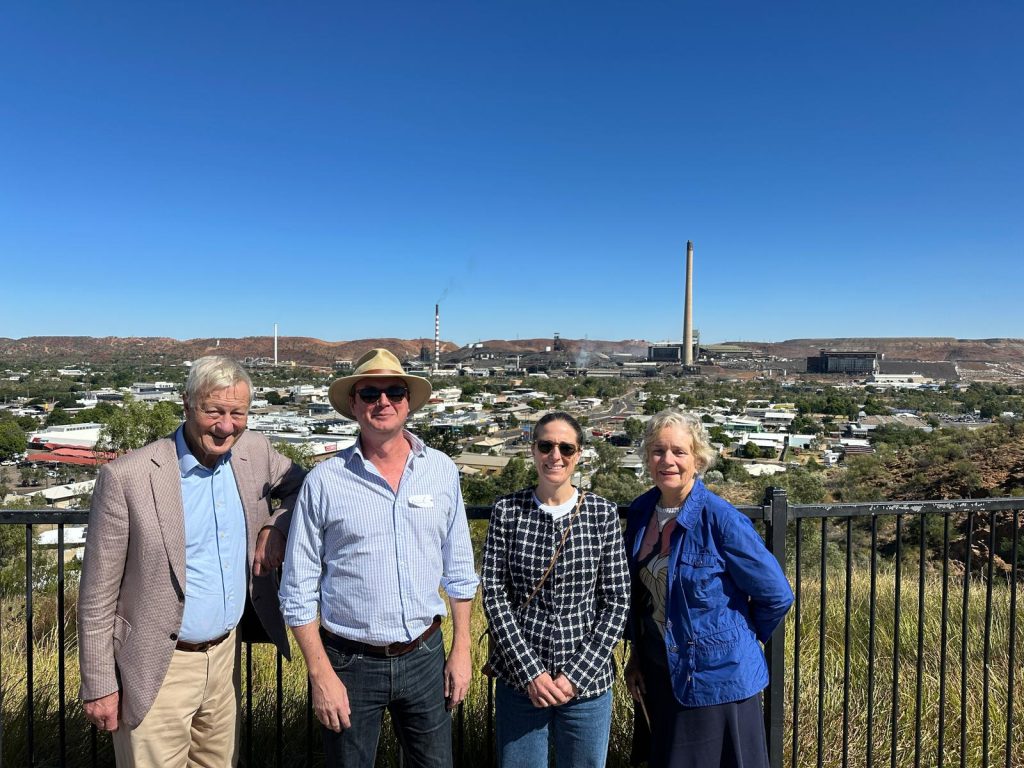
The TFFF would like to thank the schools in the Mount Isa Precinct – Barkly Highway State School, Happy Valley State School, Healy State School, Mount Isa Central State School, Mount Isa School of the Air, Mount Isa State Special School, Spinifex State College - Junior, Sunset State School, and Townview State School – for their participation, and for the opportunity to pilot such an important initiative.
Brain Health in Queensland Schools is a strategic initiative supported through the Futureproof stream.
The visit coincided with the 2024 Isolated Children’s Parents’ Association (ICPA) Qld State Conference, which was attended by TFFF Senior Program Manager Katie Norman and provided an occasion to learn from rural families, engage with the Department of Education and meet familiar and new child-focused partners.
The first day of the trip began driving out to Idalia on a beautiful North Queensland winter morning to view the new AEIOU Townsville premises, currently under construction. Here, we were joined by Alan Smith (AEIOU CEO), Russell Fryer (Hutchies Managing Director), Mitch Grimmer (Hutchies Team Leader), Schahana Clark (AEIOU Senior Service Delivery Manager), Emma Newham (AEIOU Townsville Centre Manager), and site manager Mark Taylor.

TFFF approved funding to support the construction of the new purpose-built centre in August 2023, and has previously provided support for AEIOU’s regional Autism Early Intervention program. Delivered in partnership with Hutchinson Builders, the centre was designed as a state-of-the-art facility with three classrooms, a motor skills therapy room, telehealth rooms, a community meeting and training space, research rooms and external learning environments and playgrounds. The thought put into every aspect of the build, from accessibility to noise dampening, was incredible – it was clear both staff and children will benefit greatly from the new centre.

Following the site tour, we met Kate O’Hara (Director) and Daniel Qualischefski (Gallery Manager and Curator) for lunch near Umbrella Studio. Umbrella Studio is a gallery and studio space which delivers an annual program of onsite and touring exhibitions, public programs, arts residencies, studio access, and professional development programs, along with TFFF-supported biennial arts festival, Pop Up North Queensland (PUNQ). After lunch, Kate and Daniel gave a tour of the studio, where exhibitions Pressing Topics by The Ironing Maidens and An Unnatural Historyby Sarah Treadwell were on display, and introduced the Umbrella team – Erin Ricardo (Arts Programs Manager), Rikaela Rusch (Marketing and Communications Manager), Sabrina Toby (PUNQ Creative Producer), and Amanda Galea (Arts and Marketing Administrator).
Heading downstairs to the studio space, we met a community artist in the process of utilising the equipment to create intaglio prints using recycled tetra-pack containers. Umbrella’s vast storage room was a maze of interesting and unusual artistic equipment and supplies, including a vintage loom, lithographic stones so heavy they required a pallet jack to move, and the only publicly available darkroom north of Brisbane.

Returning to our hotel, we met with Jacinta Perry (Thriving Queensland Kids Partnership Country Qld Lead). The Thriving Queensland Kids Partnership (TQKP) is a cross-sector coalition of not-for-profit, philanthropic, tertiary, and government bodies all committed to improving health, education and family services systems that shape young lives. With TFFF’s support, TQKP delivers the Thriving Country Queensland Kids Collaborative, designed to support leaders, organisations and practitioners delivering child, youth and family health, development and wellbeing services and initiatives in rural, regional and remote Queensland.
The day concluded with dinner with Dancenorth, attended by Hillary Coyne (Executive Director & Co-CEO), Kyle Page (Artistic Director & Co-CEO), Eloise Grace (Company Producer), and Judith McLean (Chair), which provided a reflective end to a productive day. Dancenorth is one of Australia’s leading contemporary dance companies. Alongside its professional ensemble, touring productions and artist development and leadership initiatives, Dancenorth delivers the TFFF-supported Community Experience Program.

Day Two began with a visit to Seed Foundation, where we shared morning tea with Brett Fragiacomo (Executive Officer), Rick Phineasa (Operational Manager, Townsville), and De’arne French (Administration Manager, Townsville) and looked in on a cohort of Deadly Start students undergoing their Health and Community Services Cert II training. Seed Foundation aims to grow the potential of Australia’s First Peoples by inspiring and promoting self-determination through education, health and employment, and provides holistic support services to improve health, wellbeing and employment outcomes. Its TFFF-supported First Peoples Health Program provides upper secondary and Year 13 students with health literacy education, qualifications, career opportunities, higher educational pathways, and support to navigate and achieve these.
Next, we stopped at the Isolated Children’s Parents’ Association Queensland State Conference held at The Cathedral School, where we were warmly welcomed by Qld State Council President Wendy Henning. The ICPA strives for equity of access to education for all students who live in rural and remote Queensland. Its policies are formed through motions brought to the state conference each year by branches from across the state. The organisation also provides an opportunity for many departmental representatives, Members of Parliament, Senators and other stakeholders to hear issues and opportunities from those directly experiencing them at its conference.

Ningana Trust has supported ICPA Qld since 2011, enabling State Council Members to attend each year’s conference, participate in delegations with state government and peak body representatives, and advocate for rural and remote students’ educational needs. After a brief moment to mingle and explore the extremely well attended conference, Wendy gave the 2024 President’s Welcome, sharing the numerous initiatives ICPA Qld has been involved with over the past year. After the initial speeches, most of the TFFF group departed back to Brisbane, leaving Katie to attend the full conference over the next two days.

Umbrella Studio, Dancenorth, and Seed Foundation are supported through the Resilience stream. AEIOU Townsville and Thriving Queensland Kids Partnership are supported through the Futureproof stream. ICPA Qld is supported by Ningana Trust.
The TFFF has long recognised the significance of the work carried out by Indigenous-led organisations in Australia, and the importance of listening deeply to Traditional Owners, amplifying their voices, and supporting their solutions for meaningful change on their own terms.
At a moment of conversation throughout Australia, we felt it important to use our platform to cast a spotlight on the remarkable Aboriginal and Torres Strait Islander organisations and people with whom the TFFF has a relationship, and the transformative work being carried out by those who lead the way toward positive change.
Throughout our 2022-2023 Annual Report, we have identified Indigenous-led organisations or agreements where TFFF funding has directly enabled the employment of an Aboriginal and/or Torres Strait Islander person. In total, the TFFF made 27 distributions in support of First Nations people and communities in 2023, and 16 of the 40 organisations partnered with were Indigenous-led.
37% of total funding in the past 12 months was directed to First Nations organisations, initiatives, or projects, with a total of $3.4M allocated to Indigenous led organisations and/or Aboriginal and Torres Strait Islander wages.
The Annual Report also highlights three partner organisations led by or working with First Nations members to enact change:

The MJD Foundation is a grassroots, Aboriginal-controlled organisation that partners with Aboriginal & Torres Strait Islander communities to support families living with Machado-Joseph Disease (MJD) and Spinocerebellar Ataxia Type 7 (SCA7).
MJD is a hereditary neurodegenerative disease found worldwide, with a higher prevalence among Aboriginal people with genetic ties to northeast Arnhem Land.
Established in 2008 on Groote Eylandt, the MJD Foundation addresses the lack of services and information for affected families. Its 'Our Way' approach includes primary health and disability support, genetic counseling, therapy, education, respite accommodation, visits to Country, research, and advocacy, and is based on a strong Aboriginal Community Worker two-way engagement model.
Gayangwa Lalara OAM, a Warnindilyakwa woman, plays a vital role in the organisation as Vice Chairperson and Senior Cultural Advisor. Under her leadership, the Foundation has expanded its reach to 26 remote communities, with funding from the FRRR SRC program enabling the development of permanent ‘in-place’ support services in Ngukurr.

Aboriginal Art Co. was founded by Amanda Hayman (Kalkadoon and Wakka Wakka) and Troy Casey (Kamilaroi) in 2019 to combat the issue of inauthentic Indigenous-style consumer products in Australia. The 2022 Productivity Commission revealed that up to 75% of such products were fake, resulting in substantial income losses for First Nations people.
Aboriginal Art Co., as Brisbane's first Indigenous Art Centre, connects Indigenous Art Centres and artists from regional and remote Australia to the Queensland market. It prioritises ethical practices, with approximately 70% of sales revenue returning to artists and art centres, and is working towards the realisation of a self-sustaining and self-determining Aboriginal and Torres Strait Islander retail and arts industry in Australia.
Aboriginal Art Co. is committed to connecting Indigenous culture and commerce, providing employment and development opportunities that include its artist-in-residence program, retail and gallery assistants, workshop facilitators, caterers, photographers, and models, along with its social enterprise fashion label Magpie Goose.

The Thriving Queensland Kids Partnership (TQKP) is addressing the need to ensure all Queensland children and young people have a positive start in life. By working to connect organisations, individuals, services, and systems, and to facilitate shared access to resources, knowledge, and networks, TQKP aims to ensure children, young people and families are supported to thrive.
TFFF has invested in two of TQKP's ten initiatives: the Thriving Queensland Kids Country Collaborative and the Thriving First Nations Kids Initiative (TFNKI). TQKP prioritises supporting the self-determination of child health related First Nations leaders and organisations, working closely with a range of First Nations leaders, organisations and communities, including Queensland Aboriginal Torres Strait Islander Child Protection Peak (QATSICPP) to advance a co-design process for the TFNKI.
Sarah Callinan, a Wangkangurru woman with expertise in early childhood development, has been appointed as the First Nations Strategic Partnerships Lead. Sarah has been involved in a range of initiatives and strategies aimed at improving early childhood outcomes for First Nations children, and has an exceptional understanding of brain and early childhood development. The active involvement of Sarah, Garth Morgan (CEO, QATSICPP) and others will help support First Nations leadership and drive collective effort across systems to better enable Indigenous children to thrive.
View the full 2022-2023 Annual Report here.
Cover photo courtesy of Children's Ground.
By providing critical funding for on ground programs and infrastructure, KKT aims to back Traditional Owners and Djungkay to continue to live on Country and undertake critical conservation and cultural work, supporting the continuation of the world’s oldest living culture.
Along with its partners, KKT works to educate and prepare the next generation of custodians, safeguard cultural knowledge, strengthen the role of local women and protect over 65,000 square kilometres of land and sea country.
KKT recognises the link between cultural heritage, community strength and conservation outcomes, and as such supports bi-cultural education projects to not only provide education that is locally and culturally relevant, but to safeguard traditions and nurture the custodians of the future.
At the request of the Nawarddeken Traditional Owners of the Warddeken Indigenous Protected Area (IPA) in West Arnhem Land, the Nawarddeken Academy was established in 2015. The Academy, a bi-cultural, community-owned school, provides access to full-time education in the remote home communities of the Warddeken IPA and educates children in both the Bininj (Indigenous) and Balanda (non-Indigenous) worlds.
The Academy has grown from a single teacher under a tarpaulin in Kabulwarnamyo to three registered independent schools, with additional Nawarddeken Academy schools established in Manmoyi and Mamardawerre at the request of Traditional Owners in 2021. Now, children at all three ranger base communities in the Warddeken IPA have access to education on their homelands, combining traditional Indigenous knowledge and the Australian curriculum.

In 2023, Nawarddeken Academy, supported by the TFFF and other funders, commenced the process of establishing a high school and early learning program, to guarantee Nawarddeken children an On-Country, bi-cultural education for the entirety of their school years. This expansion will include creating purpose-built accommodation for teachers and staff, as well as developing multipurpose classrooms that can accommodate high school students, the early learning program and adult education in the evenings.
The Nawarddeken Academy recently held a camp that brought together all three schools to create a hip-hop song and music video about their culture and communities. Watch the video, titled Cycles of the Land, here:


Cover photo: Nawarddeken Academy Students. Image Credit: Stacey Irving. All photos courtesy of Karrkad Kanjdji Trust.
The Karrkad Kanjdji Trust and the Nawarddeken Academy are supported through the Futureproof stream.
Cape York Employment, one of these entities, works throughout Cape York to create pathways to meaningful, real employment. Cape York Employment is working with job seekers and school leavers to identify job opportunities, provide access to training, improve job-readiness and break down any barriers in their path to employment.
The School to Jobs (S2J) initiative is one of many led by Cape York Employment and aims to address the major barriers for youth transitioning from education to employment. It provides a foundation of support for students, helping change their view of themselves and how to affect personal change through active participation in the job market. S2J ensures students maintain their cultural identity and connection to family and promotes an aspirational culture that motivates and encourages students to take control of their future and become the drivers of change in their local communities.
Jordan Hobson Harding, a recent graduate of Cape York Girl Academy, another entity in the Cape York Partnership, is one such student. Jordan, a young woman from Lockhart River, left school in 2021 and found herself drawn into a lifestyle of drugs and alcohol in the Lockhart River Community. Jordan’s family members supported her to make the decision to apply to attend the Academy at Wangetti Beach, just north of Cairns, where she successfully graduated in 2022.
After graduating, Jordan was supported by Cape York Employment to develop a resume, video application and the confidence to apply to Rio Tinto as an Apprentice Diesel Fitter. With the support of Cape York Partnership and her community, Jordan was accepted and made the difficult decision to move to Weipa as a first-year apprentice.

“It’s 12 hours of me sweating in a shed, but it’s an experience,” Jordan says.
Jordan shared her inspiring journey to overcoming personal challenges at the 2023 International Women’s Day Luncheon, hosted by Cape York Partnership Group CEO Fiona Jose. She was joined on stage by Cape York Institute CEO, Kirsty Davis and Chair of the Puuya Foundation, Dorothy Hobson, who both expressed their admiration for Jordan's achievements.

I was given a second chance at Girl Academy. Leaving home was hard. There were a couple of times last year when I went through depression and wanted to go home. But I went to school and ended up graduating.
– Jordan Hobson Harding
Jordan was also announced as one of the 2023 winners of Heywire, an annual storytelling competition run by ABC, showcasing the stories of young Australians from remote locations. Jordan’s story, titled ‘I hate what’s happening in my community, so I’m changing it’, describes the challenges faced by young Indigenous Australians in remote communities and her desire to contribute positively to her community.
Jordan is now considered a mentor to other youth in her community; an example of the success to be realised by accepting support, making difficult decisions and committing to education and employment. In the closing words of her Heywire story, she encourages her peers to follow in her footsteps and focus on their future, because in her words, “We need you.”
Listen to Jordan reading her Heywire submission or read the transcript here.
Cover photo: Jordan Hobson Harding on site in Weipa. All photos courtesy of Cape York Partnership.
Cape York Employment is an initiative of Cape York Partnership, supported through the Resilience stream.
In 2020, the Australian Research Alliance for Children and Youth (ARACY) quickly became concerned about the immediate and enduring impacts of the COVID-19 pandemic on children and young people, particularly those already experiencing disadvantage. It moved to initiate the Thriving Queensland Kids Partnership (TQKP), a cross-sectoral coalition of not-for-profit, philanthropic, tertiary and government bodies all committed to improving health, education and family services systems that shape young lives.
TQKP systems change approach is catalysing much-needed change by bringing people and knowledge together for the benefit of all children and young people across Queensland.
“TQKP is bringing together organisations and leaders to translate experience and science, and draw on local wisdom and innovation in policy, programs and practice, while supporting capacity building across our diverse Queensland communities and workforces.”
— Michael Hogan
Convenor, TQKP
One initiative of TQKP is the Thriving Country Queensland Kids Collaborative, delivered with partners James Cook University (JCU) and Central Queensland University (CQU), and initially resourced by the TFFF and JVT. The Country Qld Kids Collaborative exists to support leaders, organisations and practitioners delivering child, youth and family health, development and wellbeing services and initiatives in rural, regional and remote Queensland.
Philanthropic support from TFFF and JVT includes funding for a dedicated Country Partnerships Officer, Jacinta Perry (pictured), who is based in Cairns and working from JCU. Jacinta is a community development professional with a passion for projects centred on community engagement, strong partnerships and local capacity building. She is an advocate for community-led solutions and has previously worked to support economic participation for refugees, youth and First Nations communities.
The John Villiers Trust CEO, Lea-Anne Bradley, said the Country Partnerships Officer was an important role as it would “put boots on the ground to connect regionally based organisations and communities with all that the Thriving Queensland Kids Partnership has to offer.”
Thriving Queensland Kids Partnership is working to ensure vulnerable children and youth can access the right supports, at the right time and in the right way, to break cycles of disadvantage in Queensland communities.
Feature photo by Russell Shakespeare.


